Michigan fleet guides · 2026
6 Michigan intrastate trucking checks before dispatch (2026)
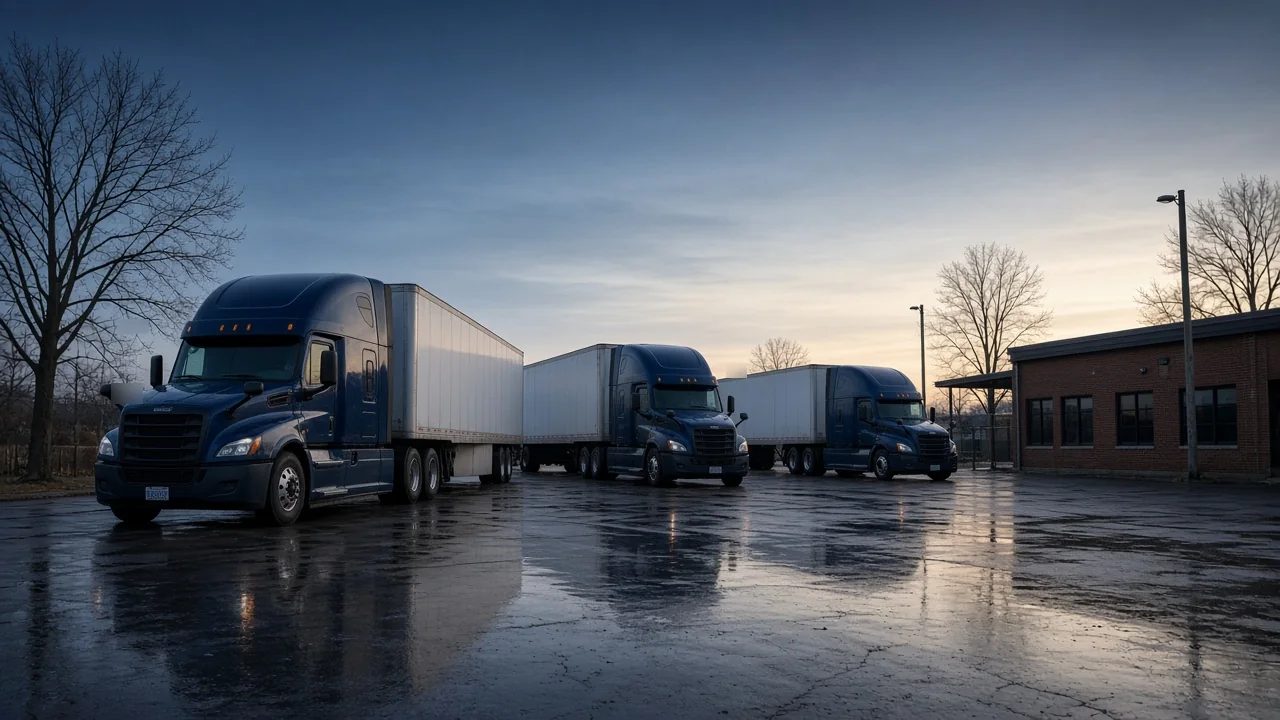
Staying inside Michigan does not remove the paperwork and safety checks. Work through these six items against the kind of hauling, the vehicle and the actual trip.
For-hire carriers hauling only inside Michigan need CVED Authority from the Michigan State Police before they operate. MSP asks for a USDOT number for vehicles over 26,001 pounds, business registration, workers' compensation proof or an exclusion, and a certificate of liability and Form E from your insurer.
| # | Item | Best for | What ready looks like |
|---|---|---|---|
| 1 | Check CVED Authority | For-hire carriers preparing to operate | The authority requirements and application status are checked. |
| 2 | Check USDOT registration | Fleets reviewing vehicle weight and registration | The MSP requirement is checked for the vehicle and operation. |
| 3 | Map the adopted safety rules | Fleets building driver and vehicle files | Driver, hours, testing and maintenance requirements have an owner. |
| 4 | Check the smaller-vehicle exception | Intrastate vehicles outside the CDL CMV definition | The scope is checked under MCL 480.11a(3), not assumed. |
| 5 | Check MSP’s filing documents | For-hire carriers completing an application | The requested insurance and workers’ compensation documents are together. |
| 6 | Check whether the work is interstate | Fleets adding freight or new lanes | The movement is classified before assuming intrastate rules alone apply. |
Want notice when Helm can take Michigan fleets? Join the founding carrier list.

1. Check CVED Authority
Best for: For-hire carriers preparing to operate.
The Michigan State Police says intrastate for-hire carriers need CVED Authority before operating on any public road in Michigan (MSP CVED regulatory). The step-by-step portal process is in Michigan CVED Authority. The application states the condition of the equipment and that vehicles passed an inspection in the past 12 months (MCL 476.3).
2. Check USDOT registration
Best for: Fleets reviewing vehicle weight and registration.
MSP lists a USDOT number as required for vehicles over 26,001 pounds GVWR. Keep the MCS-150 current like an interstate carrier would.
3. Map the adopted safety rules
Best for: Fleets building driver and vehicle files.
MCL 480.11a adopts safety regulations including 49 CFR Parts 40, 382, 383, 385, 387, 390 through 393 and 395 through 399. Where the federal text says "interstate," Michigan reads it as intrastate or interstate, and agency references are read as specified in the act, with particular provisions for hazardous-material routing. In practice that covers:
- Driver qualification files and medical cards (Part 391).
- Hours of service and ELDs (Part 395).
- Inspection, repair and maintenance (Part 396).
- Drug and alcohol testing for CDL drivers (Parts 40 and 382). See drug and alcohol testing in Michigan.
4. Check the smaller-vehicle exception
Best for: Intrastate vehicles outside the CDL CMV definition.
For an intrastate vehicle that is not a commercial motor vehicle under 49 CFR 383.5, most of the adopted list does not apply, but Parts 391 through 393 still do (MCL 480.11a(3)).
5. Check MSP’s filing documents
Best for: For-hire carriers completing an application.
MSP’s CVED guidance asks for a certificate of liability and a Form E from the insurer, plus workers’ compensation proof or an approved exclusion. Keep the documents and the application together. The source is MSP CVED regulatory guidance.
6. Check whether the work is interstate
Best for: Fleets adding freight or new lanes.
A trip can be part of interstate commerce even if the truck stays inside Michigan. Check the full freight movement before relying on an intrastate-only classification. Interstate work can add registration or authority requirements; UCR, IRP and IFTA each have their own scope.
See IFTA quarterly filing in Michigan and Indiana intrastate trucking requirements for related reading.
Drivers under 21 and intrastate medical waivers: Michigan intrastate driver age and medical waivers.
FAQ
Do I need a USDOT number if I never leave Michigan?
MSP lists a USDOT number as required for vehicles over 26,001 pounds GVWR when applying for CVED Authority. Check MSP's regulatory page for your setup.
Do federal hours of service rules apply inside Michigan?
Yes. MCL 480.11a adopts 49 CFR Part 395 and the other safety parts, and reads 'interstate' as intrastate or interstate, except where the act modifies them.
Does a private carrier need CVED Authority?
MSP's authority requirement is written for for-hire carriers. Private carriers still follow the adopted safety rules. Confirm your status with MSP.
What insurance documents does MSP ask for?
A certificate of liability and a Form E from your insurer, plus proof of workers' compensation or an approved exclusion.
How long does CVED Authority take, and when do I renew?
MSP says processing can take up to 30 days, and the application is dismissed if required documents are not received in that time. Intrastate-only carriers renew every year from October 1 to December 1. Owner-operators: see Michigan owner-operator own authority insurance.
How long does federal operating authority take for a new Michigan carrier?
FMCSA says first-time applicants using its online registration may wait 20 to 25 business days, longer if the agency reviews the application further. That process is separate from Michigan CVED Authority. See How long a new Michigan carrier waits for authority.
Sources
- MCL 480.11a: Michigan adoption of federal regulations (accessed Nov 4, 2026)
- MSP CVED: Regulatory (accessed Nov 4, 2026)
- MCL 476.3: Application for authority (accessed Nov 4, 2026)
MCL 480.11a was checked Nov 5, 2026. MSP guidance and MCL 476.3 retain the original Nov 4 source review; those pages could not be reopened during this format update.
Join the founding carrier list.
One email when Helm Partners launches, plus a DeepView briefing. No spam, and we do not sell your information.